
The sound of polished boots striking the ground echoed through the military parade grounds as soldiers marched in perfect formation. To many spectators, it looked like a proud display of discipline and national pride. But behind the uniforms, medals and military music was something far heavier — grief, remembrance and sacrifice.
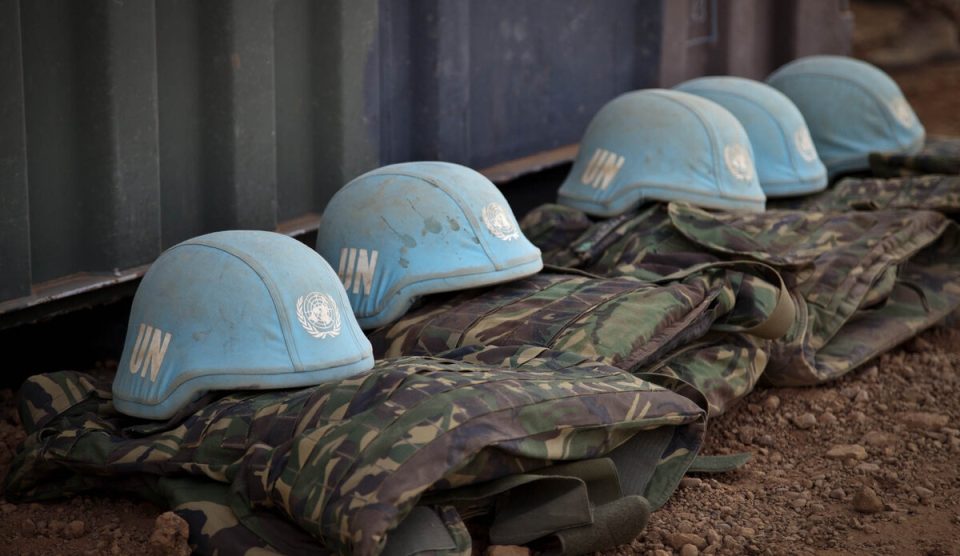
Every year on May 29, South Africa joins countries across the world to observe United Nations International Day of UN Peacekeepers. It is a day to honour soldiers who lost their lives while serving under the famous blue helmets of the United Nations. For the South African National Defence Force (SANDF), the day is more than just a ceremony. It is a painful reminder that protecting peace across Africa often comes at the cost of human lives.
South African soldiers have served in dangerous peacekeeping missions in countries such as the Democratic Republic of Congo (DRC), Sudan and Mozambique. Some returned home carrying emotional scars, while others never returned at all. In recent years, South Africans watched in heartbreak as SANDF soldiers were killed during clashes with armed rebel groups in the eastern DRC. Several soldiers deployed under regional peacekeeping missions lost their lives while trying to protect civilians trapped in conflict zones. Families back home were left devastated, children lost parents, and communities mourned heroes they would never see again.
To understand peacekeeping, Brigadier General Nditsheni Singo explains that soldiers do not decide where they are deployed they follow the instructions of government. “South Africa got involved through the decision of the government and we are just the implementers,” he says. “So after the government has decided, we were assigned the task of providing and preparing a contingent that will go outside and we have gone to different places. We are the implementers of the instructions that are given by the government.”
Over the years, South African peacekeepers have earned respect internationally for their professionalism and commitment. “I will say the United Nations is pleased with our involvement,” says Singo.
“You will realise that South Africa has been the biggest contributor in terms of peacekeeping throughout the areas where we were called.”
While many people often associate soldiers with war, peacekeeping missions are very different. According to Brigadier General Singo, their role is mainly to help communities rebuild their lives after violence.
“When the people are deployed, we must not bring the question of a war zone,” Singo explains.
“We are trying to build the community, to help communities where they are in need of our help. We are not going outside to make war, we are going outside to make peace.”
But making peace is not always peaceful.
In conflict zones such as the eastern DRC, armed rebel groups have attacked villages, displaced families and targeted peacekeepers themselves. South African soldiers have found themselves caught in deadly ambushes and firefights while protecting civilians. Lieutenant Colonel Lebeko Kwata from the 44 Parachute Regiment says peacekeeping often requires soldiers to face extremely dangerous situations. “Peacekeeping is very much important for us as soldiers because it goes along with the community so that we can be stable and have security,” says Kwata. “If other countries are in conflict, we have to make sure that South Africa is free from anything that is going to disturb peace and security.”
He says sometimes peace can only be achieved through force. “Sometimes when you go for peace, to make sure that peace abides, somewhere somehow you are going to force it,” he explains. “And to force peace, that is where we are going to take arms and taking arms, you will be fighting with soldiers that are prepared to fight. If we don’t fight back, they will kill us.” For paratroopers, who are often deployed into the most dangerous operations, losing fellow soldiers is deeply personal.
“For us as paratroopers, because the majority of the people that have passed here are paratroopers, we are solid in a sense that when we are fighting we stick together as a group,” says Kwata. He says their faith and brotherhood help them cope with the pain. “We believe that they don’t depart, they left and they are going to regroup. When we arrive, we will meet them in heaven. That is the motivation that keeps us together.”
Kwata openly admits that becoming a soldier means accepting the possibility of death. “The nation at large must understand that when you’re a soldier, when you sign, you sign your warrant of death,” he says.
“But soldiers are human beings too.
They have families, children and dreams just like everyone else.”Behind every fallen soldier is a grieving family. Some children grow up without parents. Wives lose husbands. Parents bury their sons and daughters who left home hoping to serve their country with pride.Brigadier General Singo says memorial services are important because they remind families that they are not alone. “It is important when we have occasions like this to remind the families that we are with them,” he says.“We have lost, and the families have also lost. We want them to know that the fallen heroes remain part of us forever.”
The SANDF also assists families financially and helps children of fallen soldiers continue with school and tertiary education through special support funds. “The Defence Force has never forsaken any member who passes on,” says Singo. “The children who are left behind are assisted with schooling through to tertiary level.” Although military memorials are filled with formal speeches, wreaths and sad music, the message behind them is deeply human: peace is never free.
The safety and stability many South Africans enjoy every day are often protected by soldiers serving far away from home, in dangerous and unfamiliar territories, and while their names may fade from headlines, their families and fellow soldiers continue carrying the pain of their absence. As Brigadier General Singo concluded: “Our intention is to make sure that the family is aware that we are remembering them. We are also supporting the families in having good memories about the fallen heroes.”
