
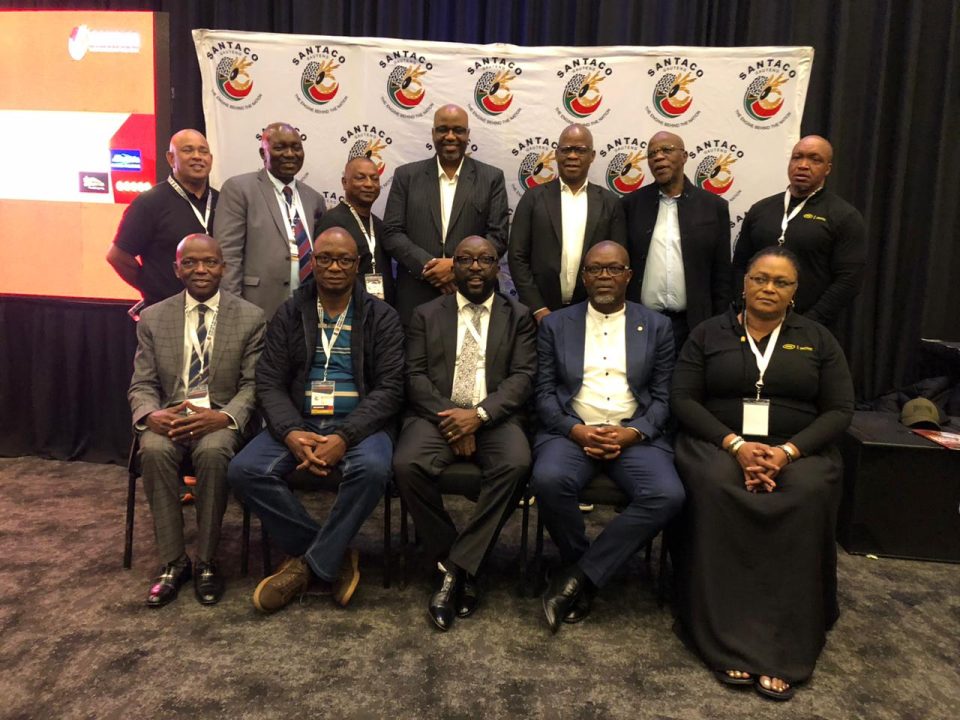
The South African National Taxi Council (SANTACO) has concluded its National Elective Conference with renewed promises to improve passenger safety, professionalise the taxi industry, and modernise operations.
The gathering brought together delegates from all nine provinces to elect new leadership and map out a progressive roadmap for the multi-billion-rand industry.
The conference also marked a milestone for SANTACO as the organisation celebrated 25 years since its establishment. Held under the theme “25 Years of Unity: Building the Taxi Industry Together,” discussions focused on transforming the sector, improving driver behaviour, and strengthening cooperation within the industry. Delivering the keynote address, Minister of Transport Barbara Creecy praised SANTACO’s contribution to the country’s transport system, noting that the taxi industry remains the backbone of public transport in South Africa.
She said government recognises the critical role the industry plays in connecting millions of people to jobs, schools, healthcare facilities, and economic opportunities every day. The Minister also addressed ongoing challenges facing the sector, including route oversaturation, road safety concerns, and the need for stronger regulation and coordination.
As part of efforts to ensure long-term sustainability, Creecy announced plans to restructure public transport funding into a unified model aimed at reducing risks across the taxi industry value chain.
“Derisking, in the context of the minibus taxi industry, must be understood as a broader and more structured reform process,” she said. “It should reduce risk across the full industry value chain, from the operator’s ability to repay finance, to the legitimacy of operating licences, route-level income viability, improved data systems, governance, and institutional coordination.” SANTACO President Abner Tsebe, who was re-elected unopposed, acknowledged communication challenges between the organisation and its members, describing information sharing as one of the administration’s weakest areas.
“The weakest link, I think, was communication and information dissemination to members on the ground,” he said. Tsebe said his administration would prioritise teamwork within the executive rather than relying on individual leadership. He also announced plans for a strategic planning session to finalise operational priorities for the new term. Among the key priorities, Tsebe highlighted the professionalisation of drivers, improved customer care, and the introduction of advanced driver training programmes.
“Our drivers’ training is of importance. We need to come up with a programme and proper data on who the drivers are and which associations they belong to. Training is an answer to many of the challenges affecting commuters,” he said. He added that customer care and advanced driving courses would also form part of efforts to improve commuter experiences and road safety standards.
Both government and the newly elected leadership agreed that improving road safety would require stronger collaboration between the taxi industry and law enforcement agencies. Tsebe called on traffic departments and law enforcement authorities to play a more active role in enforcing road regulations. “We need to come up with committees to monitor some of these issues, but we must also work hand in glove with law enforcement because we are not law enforcers. Law enforcement has to enforce regulations,” he said.
The conference also marked significant progress in gender transformation within the organisation.
SANTACO successfully integrated its Women’s Structure across different transport sectors, with the newly elected chairperson securing a seat on the organisation’s mainstream national executive committee.
Leaders at the conference expressed optimism that the newly elected executive would help modernise the taxi industry, improve commuter safety, and strengthen the sector’s role in South Africa’s public transport system.
