
By Julia Moyo
As South African youth continue to face high levels of unemployment, initiatives in Gauteng are focusing on equipping young people with digital skills such as coding to improve access to opportunities in the technology sector.
According to Statistics South Africa (Stats SA) in its Quarterly Labour Force Survey (QLFS) for the first quarter of 2026, the youth unemployment rate stood at 45.8%, highlighting the continued difficulty young people face in entering the labour market. The data was released by Stats SA last month.
This was evident at a Youth Month coding bootcamp held in Johannesburg on Friday, where young participants gathered at the WeThinkCode_ campus in Rosebank to explore pathways into the technology sector. The event also featured a live broadcast by 5FM’s 5 Mid Mornings with Karabo, hosted by Karabo Ntshweng, which engaged with students and facilitators as part of the program.
This is taking place during Youth Month, which is observed in June to highlight the role of young people in South Africa’s history and the challenges they continue to face. The country will also commemorate Youth Day on Tuesday next week.
The event formed part of the Code Youth Bootcamp initiative, which aims to introduce young people to coding fundamentals and the broader opportunities available in the tech industry through hands-on learning and interactive discussions.
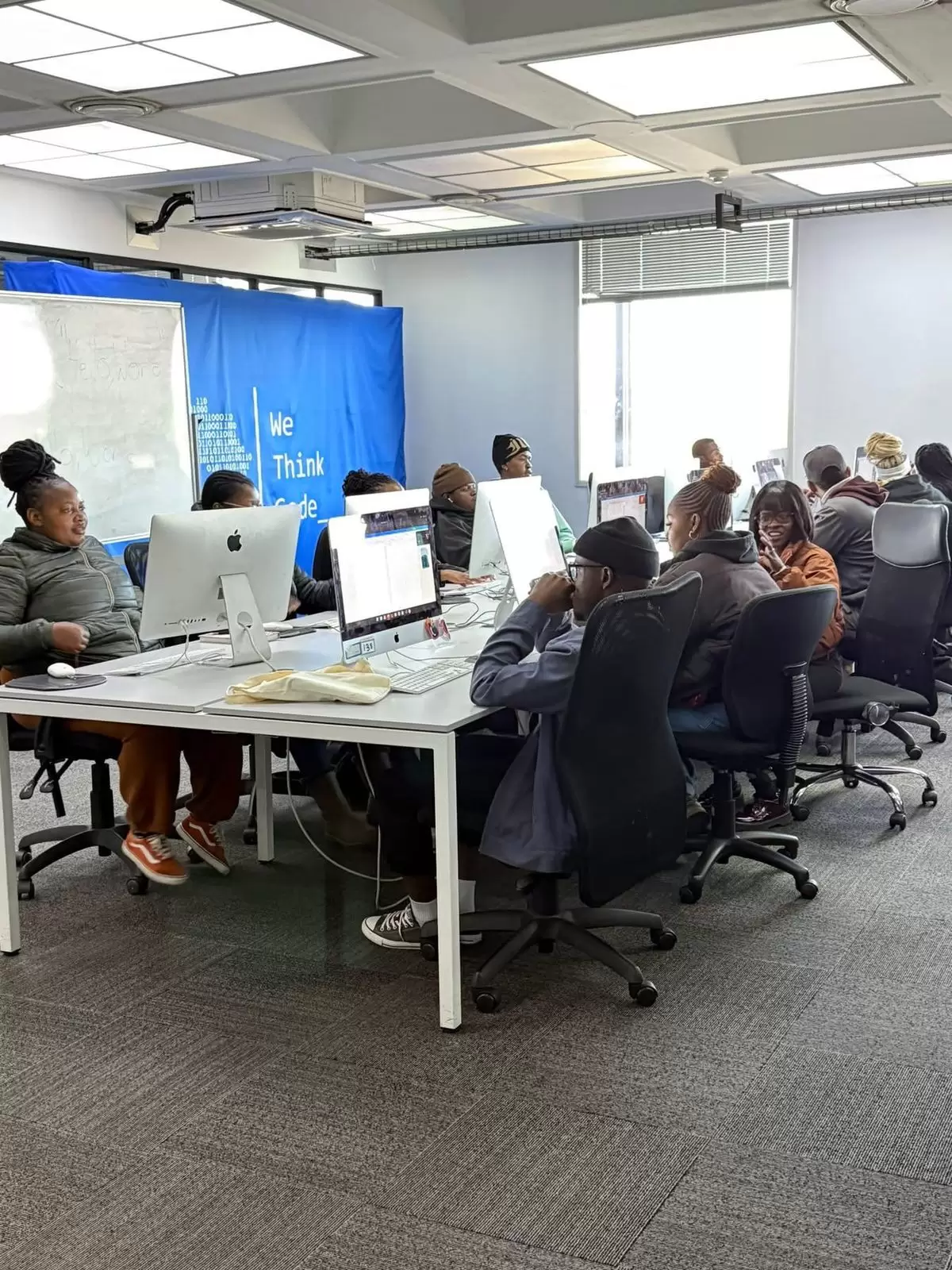
For many attendees, the appeal of coding lies in its growing demand in the job market and its potential to open doors in a competitive employment environment where traditional opportunities remain limited. Speaking in a separate interview, WeThinkCode_ graduate Israel Mbuyu, who studied at the institution from February 2025 to January 2026, said coding is increasingly becoming a pathway not only to employment but also to entrepreneurship and community development.
“It’s an opportunity for us to give young people coding fundamentals as well as career inspiration and roadmaps into the various opportunities that are available in the tech space,” said Mbuyu.
He said the value of coding extends beyond technical training, as it equips young people with tools to solve real-world problems.
“We’re not just teaching coding skills. We also want young people to understand that they can become pipelines into their communities with the skills they’re learning, whether that’s opening businesses or coming up with ideas that can make our communities better,” he said.
Mbuyu said the program is designed to be inclusive, focusing less on prior experience and more on curiosity and problem-solving ability. “We don’t really care about your coding experience or how much you think you know. We want curious minds and problem-solvers,” he said. He added that one of the key messages young people should take from such initiatives is that there are multiple entry points into the technology sector, regardless of background.
“The key takeaway is that there are a vast amount of opportunities in the coding space, and everybody can contribute something, whether it’s culture, innovation, entrepreneurship or simply ideas that can improve communities,” said Mbuyu.
As South Africa continues to grapple with high levels of youth unemployment, initiatives aimed at equipping young people with digital skills are increasingly being seen as part of the solution to bridging the gap between education and employment.