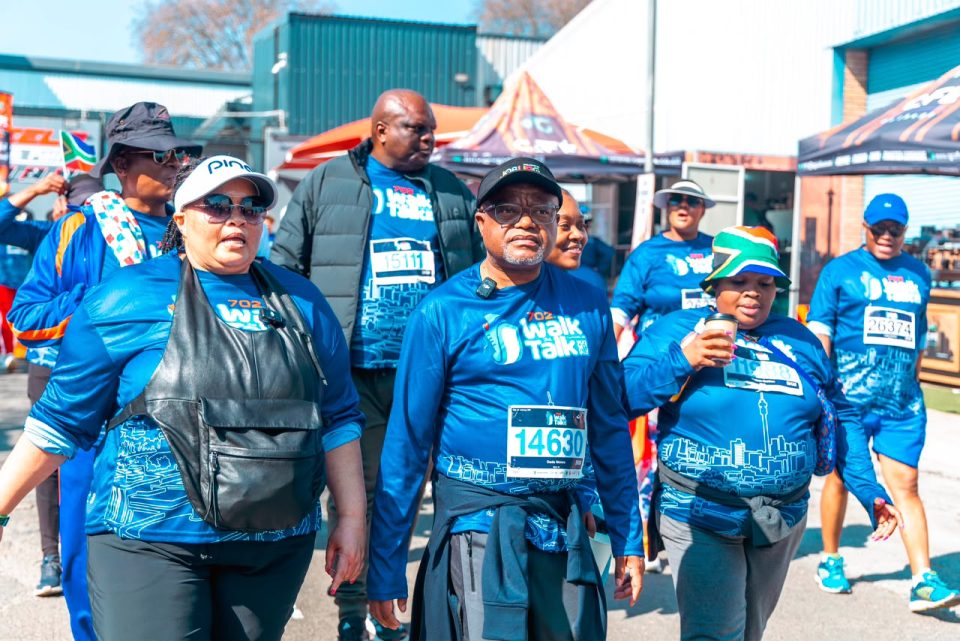
Johannesburg’s streets came alive with colour, conversation and community spirit on Sunday as about 25,000 people took part in the 20th edition of the 702 Walk the Talk, transforming the city into a celebration of unity, health and local pride.
Participants from different racial, cultural and social backgrounds walked through some of Johannesburg’s historic precincts, offering a reminder that the city is more than its challenges. The event showcased Johannesburg’s heritage, supported small businesses and highlighted the role of public spaces in bringing communities together.
Speaking to Gauteng News, Johannesburg Executive Mayor Dada Morero said the annual walk has grown into one of the city’s flagship events, promoting social cohesion while creating opportunities for local entrepreneurs.
“For us it’s an important event because it addresses issues of social cohesion, bringing people from across racial lines together,” said Morero.
He said traders and small businesses along the route benefited from the thousands of participants who stopped to buy food, drinks and locally made products.

“You can see small businesses presenting their products and selling their goods. At the same time, the event exposes people to Johannesburg’s history and the beauty of the city,” he said.
Morero added that the event also demonstrated the value of partnerships between government and the private sector.
“The support from sponsors confirms what we have been saying – government and the private sector must work together to make our city and our country work.”
The walk took participants past several heritage landmarks and historic buildings, giving many residents an opportunity to experience parts of Johannesburg they seldom visit.
Morero said the City had worked hard to ensure the route was clean and welcoming.
“We’re doing everything possible to make the city look good once again.”
Deputy Minister of Sport, Arts and Culture Peace Mabe described the event as an example of how sport and recreation can unite South Africans while contributing to the local economy.
“It’s a beautiful day where we see people from all walks of life coming together. Twenty years is no child’s play. It is a significant milestone.”
Mabe said events such as Walk the Talk also benefit hotels, transport operators, street vendors and other small businesses, injecting much-needed activity into Johannesburg’s economy.
Among the thousands of participants was Greatman Mkhwebu, who said the event reminded him of the power of community.
“It brings people together, allowing us to meet new people, have conversations and build friendships,” he said.

Mkhwebu said walking through the city also gave him a new appreciation for Johannesburg’s heritage and diversity.
“Despite our different backgrounds, political beliefs or nationalities, we are one people. Johannesburg can still prosper through unity, peace and respect.”
As the last walkers crossed the finish line, the message was clear: beyond promoting healthy lifestyles, the 702 Walk the Talk has become a celebration of Johannesburg itself—its people, its resilience and its enduring ability to bring communities together