By Nomazulu Moyo
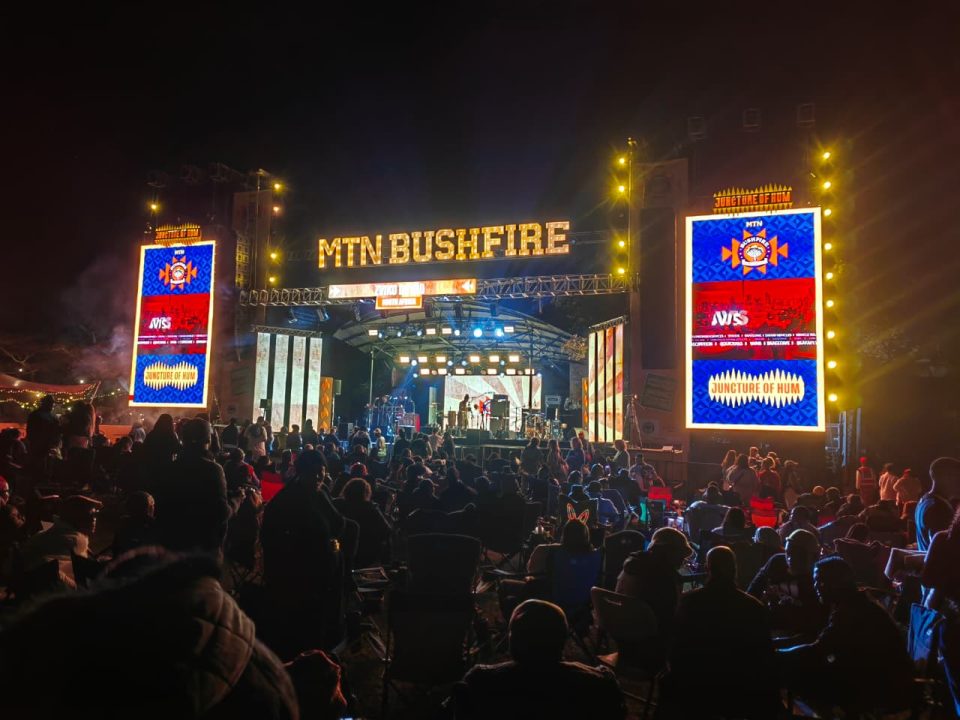
While thousands of people attend MTN Bushfire every year for its music, culture and atmosphere, the annual festival has become much more than a weekend of entertainment. Behind the packed stages, colourful markets and international performances lies an economic engine that continues to create opportunities for local businesses, artists and tourism operators across Eswatini.
Held at the iconic House On Fire venue in the Malkerns Valley, MTN Bushfire has grown from a local arts gathering launched in 2007 into one of Africa’s largest multicultural festivals. The event now attracts more than 23,000 visitors from over 60 countries, bringing significant spending power into the kingdom while promoting cultural exchange and social impact through its #BringYourFire campaign. The festival’s influence can be seen across multiple sectors, from hospitality and transport to food traders, accommodation providers, crafters and entrepreneurs.
According to festival figures, food traders generated E4,819,021.50 in revenue during the 2025 edition of MTN Bushfire. A total of 49 food traders participated in the event, while informal community vendors operating inside the festival generated E84,848 in sales. The highest-grossing food trader recorded revenue exceeding E420,509 during the festival weekend.

The culinary sector also created employment opportunities, with 83 people employed during the event. Sustainability remained a key focus, with seven tonnes of food waste and packaging composted and 310 litres of used cooking oil recycled into biofuel. The festival’s cashless payment system has further strengthened opportunities for traders by providing accurate sales data and valuable consumer insights.
For Melusi Dlamini of Peculiar People, custodians of the Made in Eswatini initiative, MTN Bushfire serves as an important platform for local entrepreneurs to showcase their products to both local and international audiences. Dlamini explained that the Made in Eswatini initiative was established in 2024 to help consumers discover locally produced goods and support small businesses that often struggle to access mainstream retail markets. “We saw that there were many products being made locally, but people did not know about them because most of the producers are still small-scale businesses. They are not necessarily on shop shelves, so they needed a platform to be discovered,” he said.
The partnership with MTN Bushfire has allowed local producers to introduce their products directly to thousands of visitors from across Africa and the world. Among the products showcased at the festival were locally made clothing, jewellery, candles, food products and crafts. Dlamini pointed to brands such as Coco Collection, a locally produced bag brand that has gained international recognition. According to Dlamini, the financial impact of Bushfire extends well beyond the festival weekend. “For small business owners, it’s about being seen, being heard and making sales. The amount of money local producers make over the Bushfire weekend is able to sustain them for the next couple of months,” he said.
He added that supporting local products creates a ripple effect throughout communities. “Every time people purchase a local product, they are contributing towards building our local communities. The money remains within the economy, allowing businesses to reinvest and grow.” The festival’s impact is equally visible in the tourism sector. Hotels, guesthouses and accommodation establishments across Eswatini experience a surge in bookings in the months leading up to the event.
“Each and every hotel, guest house and accommodation establishment is booked during the Bushfire weekend, some as far as 200 kilometres away. People are planning their trips and paying well in advance,” said Dlamini. Among the businesses benefiting from this tourism demand is Glamping Adventures, which provided luxury camping accommodation for festivalgoers seeking a comfortable outdoor experience.Glamping Adventures CEO Gugu Sithole said MTN Bushfire attracts visitors from across Southern Africa and beyond who are looking for unique travel experiences.
“MTN Bushfire attracts visitors from across the region and internationally, many of whom are looking for unique outdoor experiences without compromising on comfort. Our participation at the festival aligns perfectly with our mission of making nature-based travel more accessible, enjoyable and memorable,” said Sithole. She said the event also provides an opportunity to showcase the growing appeal of experiential tourism in Southern Africa.
“Beyond providing accommodation, it was an opportunity to connect with travellers who value experiential tourism and contribute to the overall visitor experience at one of Africa’s most celebrated festivals.” While the economic impact remains substantial, music remains at the heart of the Bushfire experience. This year’s programme featured artists from Africa, Europe, Australia and beyond, performing across multiple stages and reflecting the festival’s commitment to cultural diversity.
South African artists featured prominently throughout the weekend, drawing large crowds and reinforcing the strong cultural ties between South Africa and Eswatini. Festivalgoers were treated to performances by acclaimed singer-songwriter Msaki and musician Jesse Clegg, who performed together under Project Entropy on the Main Stage. Their performance was among the most anticipated of the weekend and received a warm reception from the audience.
Other South African acts included Moonchild Sanelly, Young Stunna, Kabelo Mabalane, Ndlovu Youth Choir, Buhle Mbongwa, Yugen Blakrok, Guy Buttery, Dan Patlansky, Bubbles, DJ Bob, Booshle G, Zviko Dryad and the Busi Mhlongo Tribute featuring Xolisa Dlamini, Buhlebendalo and Zawadi Yamungu. Electronic music fans were also treated to performances by Thakzin, Artwork Sounds, Coco SA, Shakes & Les and Lubonk.
One of the most anticipated international acts was Kokoroko, a young London-based eight-piece band known for its fusion of Afrobeat, highlife and jazz. Led by trumpeter Sheila Maurice-Grey, the group draws inspiration from its West African heritage while incorporating influences from London’s diverse music scene. Following their performance, the band praised the reception they received from festivalgoers.
“I think maybe the best thing that I’ve ever had at a show or a festival,” one member said while reflecting on a moment when the crowd continued singing despite a temporary power interruption during their set. The musicians also highlighted the influence African music has had on their artistic journey.
“Our first shows, we were playing South African music as well. Your music has definitely influenced our music in a big way. It’s part of our foundation.” The band described performing for African audiences as a special experience. “It’s the best. We want to do it more,” they said.
The festival also provided opportunities for emerging local artists to perform before international audiences. One of the breakout acts of the weekend was Emagagu, an Eswatini group making its first appearance at MTN Bushfire. The group’s energetic performance attracted attention from festivalgoers and industry observers alike. Group leader Percy Thwala described the opportunity as a major milestone.
“Today’s performance was cool and I didn’t believe it would be this good. Performing in front of such a crowd has always been a dream for us,” he said. Thwala acknowledged the challenges the group faced on their journey to the Bushfire stage. “It’s been a challenge, but we thank everyone who has been supporting us, watching us and promoting us. By the grace of God, we made it here.”
Their debut performance highlighted the role MTN Bushfire continues to play in nurturing local talent and providing emerging artists with a platform to showcase their work before regional and international audiences. Founded by brothers Jiggs and Sholto Thorne, MTN Bushfire was created as a platform to support the arts while encouraging dialogue around social and environmental issues. Nearly two decades later, the festival continues to balance entertainment with economic development, cultural exchange and social impact.
For local entrepreneurs, artists and tourism operators, Bushfire is more than a music festival. It is a platform that generates income, creates opportunities and introduces Eswatini’s talent, creativity and entrepreneurial spirit to the world. As another successful edition comes to a close, the festival’s influence can be measured not only in ticket sales and packed stages, but also in the businesses sustained, jobs created and dreams realised along the way.