Picture supplied
The South African Human Rights Commission (SAHRC) has heard details of failing infrastructure, water shortages and emergency interventions during its inquiry into Gauteng’s ongoing water crisis.
The hearings, which started on 19 May and ended on 21 May, focused on the impact of recurring water disruptions on communities across the province, particularly poor and vulnerable residents. The inquiry follows growing complaints from residents about unreliable water supply, ageing infrastructure, service delivery failures and governance challenges affecting several municipalities.
Representing the Gauteng Department of Cooperative Governance and Traditional Affairs (COGTA), the department’s Head of Department appeared before the Commission to outline government interventions aimed at addressing the crisis. According to COGTA spokesperson Admire Ndaba, water disruptions experienced between January and April were mainly caused by power failures and burst pipes within Rand Water’s bulk infrastructure system.
Ndaba said the disruptions caused reservoir levels to drop to critically low levels in several areas across Gauteng. Ndaba also acknowledged ongoing challenges including ageing infrastructure, high water losses through leaks, wastewater treatment failures and the impact of load shedding on water systems. He said government has introduced a weekly intergovernmental water forum involving municipalities and Rand Water to monitor supply systems, identify risks and coordinate responses.
According to Ndaba, the City of Johannesburg has surveyed more than 4,700 kilometres of pipelines as part of leak detection programmes. Ndaba said more than 1,200 pipe bursts and 3,700 leaking water meters have been repaired, saving over 6.8 million kilolitres of water. Ndaba said government also introduced modular water treatment plants in Hammanskraal through a partnership involving Gauteng COGTA, the Department of Water and Sanitation and the City of Tshwane.

Picture supplied
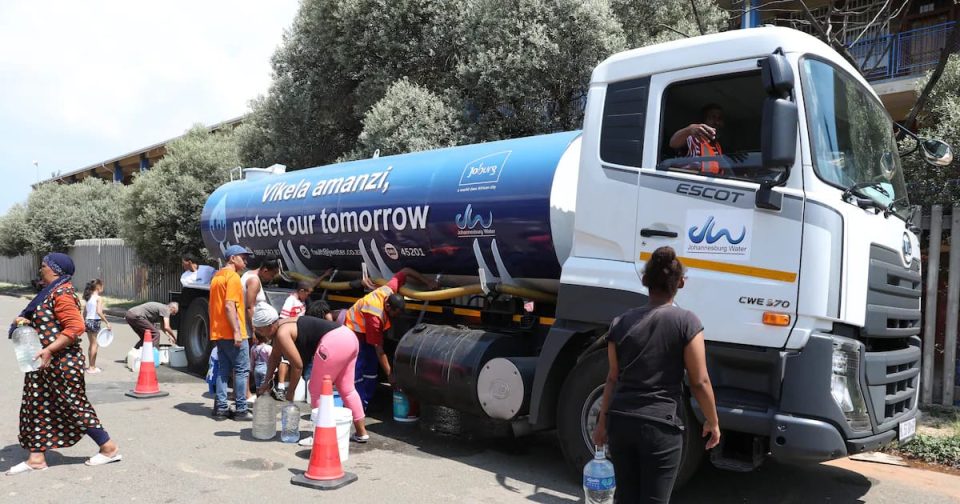
He said the intervention restored safe drinking water to communities affected by long-running water quality problems. Ndaba further said emergency responses to water outages include the deployment of water tankers, prioritisation of hospitals and schools, and the use of alternative water sources such as boreholes. He said long-term plans discussed during the inquiry include the AmanziFix initiative, which aims to deploy artisan trainees to repair leaks faster and improve municipal maintenance capacity.
Ndaba said government is also developing a digital monitoring system with the Council for Scientific and Industrial Research (CSIR) to track reservoir levels, pressure changes and leaks in real time. He added that municipalities are preparing for additional water supply expected through the Lesotho Highlands Water Project by 2028.
Despite these interventions, Ndaba said municipalities continue to face serious financial and operational difficulties. He said municipal debt has reached R165.77 billion, while unemployment, vandalism, non-payment for services and shortages of technical skills continue to affect service delivery. “Water is not a luxury; it is a fundamental human right protected by Sections 24 and 27 of the Constitution,” Ndaba quoted the department’s Head of Department as telling the inquiry. The SAHRC said the ongoing water crisis raises concerns about constitutional rights, including access to sufficient water, dignity, healthcare and a healthy environment.
“The recurring disruptions in water supply raise serious concerns regarding the enjoyment of several constitutional rights, including the rights to dignity, equality, life, healthcare, a healthy environment and access to sufficient water,” said SAHRC spokesperson Wisani Baloyi in a media statement issued before the hearings.

Picture supplied
Several municipalities also appeared before the inquiry to explain local challenges affecting water supply. At Merafong City Local Municipality, Acting Executive Manager for Energy Ntokozo Gubevu told the Commission that ageing infrastructure, sinkholes and non-payment for services remain major concerns.Gubevu said the municipality expects to receive R30 million from the Department of Water and Sanitation to help address infrastructure problems. He also told the inquiry that sinkholes continue to damage infrastructure due to the dolomitic nature of the area.
Lesedi Local Municipality Municipal Manager Sibusiso Dlamini told the inquiry that although most households are connected to piped water, low water pressure remains a challenge in some communities. Dlamini said the municipality spends about R400,000 every year on water tanker services during major disruptions.
Meanwhile, Midvaal Local Municipality Municipal Manager Phumudzo Magodi said the municipality currently supplies water to 47 informal settlements through tankers. Magodi added that the municipality faces a R1 billion backlog linked to ageing infrastructure and reservoir maintenance. Meanwhile, the Democratic Alliance last week took the City of Johannesburg to court over the ongoing water crisis, accusing the metro of failing residents while increasing tariffs for unreliable water supply.
SAHRC spokesperson Wisani Baloyi said the inquiry forms part of the Commission’s constitutional mandate to protect and monitor human rights. Gauteng Provincial Government spokesperson Elijah Mhlanga said the hearings form part of ongoing efforts to address service delivery concerns linked to water supply challenges across municipalities.