
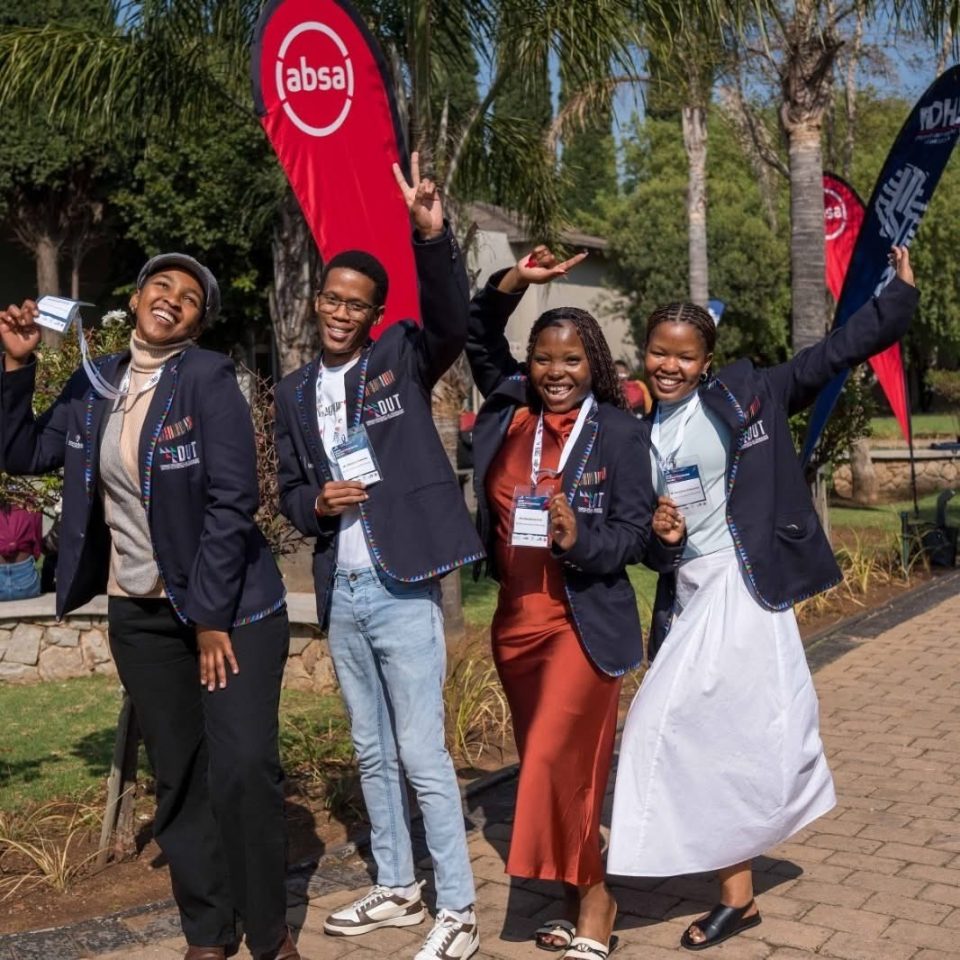
Faced with persistent youth unemployment, South African university students took center stage at the 2026 EDHE Absa Studentpreneurs Indaba on Thursday, presenting grassroots enterprises designed to move beyond survival and create jobs within local communities.
The gathering was hosted by Universities South Africa (USAf) through its Entrepreneurship Development in Higher Education (EDHE) Programme, in strategic partnership with Absa. The platform brought together hundreds of student founders from across the country’s 26 public universities to turn campus innovation into viable businesses.

For student founders on the exhibition floor, these ventures are already addressing everyday problems and hiring local youth. Sandy Madjouche, an honours student at the Cape Peninsula University of Technology (CPUT) and founder of natural hair and skincare brand Dune Nature, began making her products after suffering from skin conditions that undermined her confidence. Today, her enterprise employs two people.
“Having this kind of condition, you lack confidence and you can’t even go and apply for a job,” Maduchi explained. “I am employing two people at the moment. They are the ones helping me pack the product, they are the ones helping me do the labelings. Learning from me, they are also going to teach other people as well.”
Addressing the difficult shift from university life to sustainable business, Dr Edwell Gumbo, Director of Entrepreneurship at USAf, highlighted that universities now offer enterprise support for three years post-graduation.
“I no longer speak about job creation. I talk about economic participation,” Gumbo said. “The concept of job creation where big industries or universities were producing skilled labour for big industries is long gone. When a venture grows then, as a consequence of that, employment is created.”

Lack of capital remains the most formidable barrier for young founders without assets or credit history. Setlogane Manchidi, Managing Executive for Corporate Citizenship at Absa, stated that the bank established the Absa Youth Entrepreneurship Fund to provide grant capital rather than debt to get student businesses off the ground.
“Many entrepreneurs, including student entrepreneurs, get rejected not because their ideas are not viable, but just because they themselves have not been able to demonstrate the extent to which they’re bankable,” Manchidi said. “Let’s give them a chance by giving them initial grants, and the initial grants should put them on a path that would see them be considered bankable.”
