

The City of Tshwane has launched a new data platform it says will help it identify service delivery problems faster and improve the way municipal departments respond to them.
But residents will not have access to the live dashboard being used by the city to monitor service delivery failures.
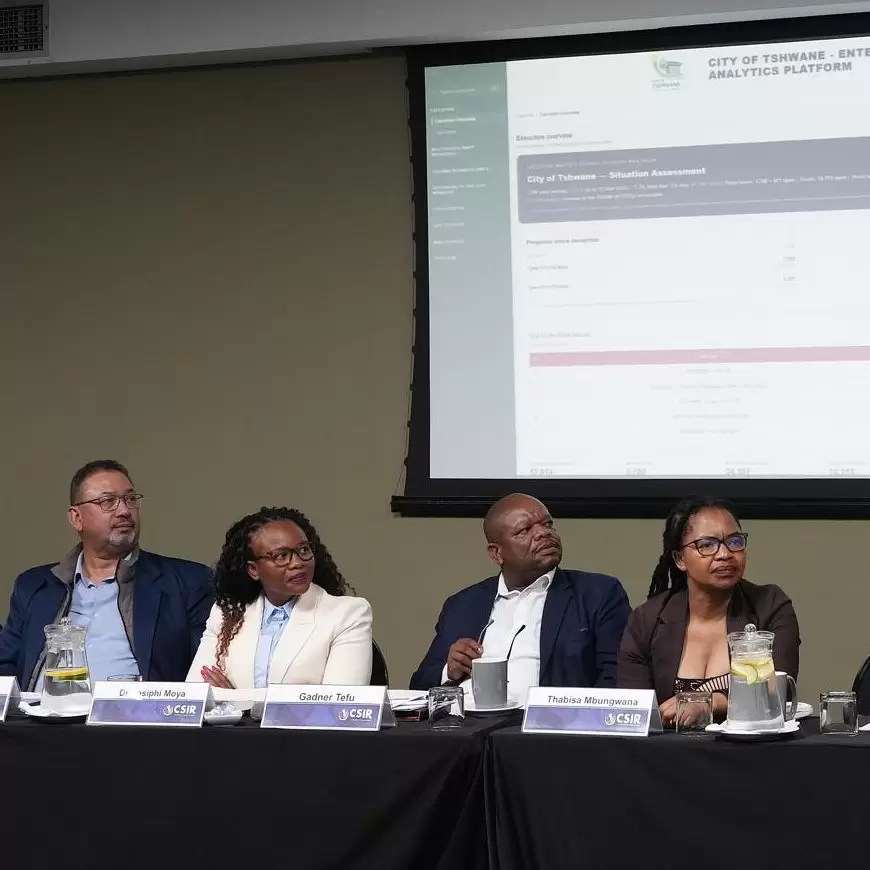
The City and the Council for Scientific and Industrial Research (CSIR) officially launched the Enterprise Data and Analytics Platform at the CSIR Pretoria Campus on Tuesday.
The platform brings data from different municipal departments into one system, allowing city officials to track issues such as potholes, broken streetlights and other service delivery complaints.
The launch comes as residents in different parts of Tshwane continue to report problems including water outages, power interruptions, damaged roads and broken streetlights.
The system replaces the use of static PowerPoint presentations during weekly performance meetings with live data that can be updated as municipal work is reported and completed.
CSIR chief executive officer Dr Thulani Dlamini said the platform was designed to give the city a clearer picture of its service delivery performance.
“We are developing data and analytics to create a single point of truth for the city,” Dlamini said.
He said the system could show officials how many potholes had been reported, how many had been repaired and how many remained outstanding.
The platform has been undergoing a six-month testing phase, during which the city has been able to identify areas where service delivery is falling short.

Executive Mayor Dr Nasiphi Moya acknowledged that the data had highlighted problems with some of the city’s basic services.
“The data is showing us that we are not doing well enough, such as your street lights, the potholes, the high-mast lights,” Moya said.
Moya said the information would help the city identify areas requiring attention and ensure that services were not directed only to communities that submitted the most complaints.
“We want to serve all residents equally, and so we don’t want only those residents that know how to make the loudest noise to be served,” she said.
However, the city’s Service Delivery War Room dashboard, which provides officials with a live view of service delivery information, will remain an internal tool for now.
Residents can continue using existing municipal channels to report problems and track individual complaints using reference numbers, but they will not be able to access the full live dashboard or ward-level updates.
The city said the public dashboard would only be considered once the data had been fully tested.
The decision to keep the live information internal raises questions about how residents will be able to independently monitor the city’s progress in addressing service delivery problems.
For now, the platform will remain primarily a management tool for municipal officials, who will use the information to identify problem areas and track the city’s response.
